


• Home
  • New Patient Center
    • What to Expect
    • Veterinary Resources
    • Payment Options
    • Anesthetic Release Form
    • Request An Appointment
  • About Us
    • Meet the Doctor
    • Services
  • Contact Us
  • Veterinary Topics
  • Home
  • New Patient Center
    • What to Expect
    • Veterinary Resources
    • Payment Options
    • Anesthetic Release Form
    • Request An Appointment
  • About Us
    • Meet Our Team
    • Services
  • Contact Us
  • Veterinary Topics
    • Pet Health
      • Chronic Conditions
      • Digestive and Oral Health
      • Diseases and Viruses
      • Pests and Parasites
      • Orthopedics
    • Today's Veterinarian
    • Choosing Your Pet
      • Finding Your Pet
      • Cats
      • Dogs
      • Exotics
        • Amphibians
        • Birds
        • Reptiles
          • Lizards
          • Turtles
      • Small Mammals
        • Ferrets
        • Rabbits
        • Domesticated Animals
          • Prairie Dogs
        • Pocket Pets
          • Chinchillas
          • Guinea Pigs
          • Hamsters
          • Hedgehogs
          • Rats
      • Livestock
        • Cows
        • Donkeys, Horses & Mules
        • Goats
        • Pigs
        • Poultry
        • Sheep
    • Living With Your Pet
      • Bringing Your Pet Home
      • Children and Pets
      • Providing Care
      • Travel
      • Saying Goodbye
    • Newsletter Library
      • Cats
      • Tips for Pet Owners
      • Behavior & Training
      • Fleas & Parasites
      • Keeping Pets Healthy
      • Recognizing Illness
      • Nutrition & Food
      • Pet Dangers
      • Seasonal Topics
      • Visiting the Vet
      • Equine
      • Newsletter Archive
        • Fun with Pets
        • Unbelievable Pets
    • Video Newsroom
      • Health Topics
      • Technology and Science
      • Other Interests
    • Newsletter Library
    • Client Survey
    • Pets4Kids
Beachside Animal Clinic

239-579-0804

  • Home
  • New Patient Center
    • What to Expect
    • Veterinary Resources
    • Payment Options
    • Anesthetic Release Form
    • Request An Appointment
  • About Us
    • Meet the Doctor
    • Services
  • Contact Us
  • Veterinary Topics
Menu

239-579-0804

Error!

    • Home >
    • Articles >
    • Choosing Your Pet >
    • Livestock >
    • Poultry >
    • Turkeys

    Turkeys

    • Created in Choosing Your Pet, Livestock, Poultry

    turkeys

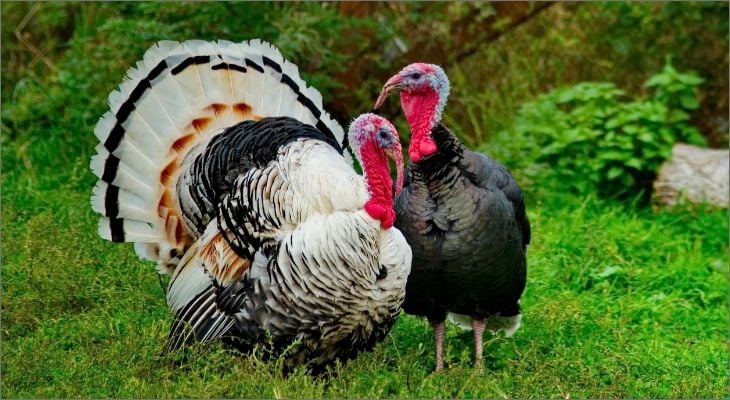
    While all animals have unique personalities, turkeys are usually docile animals. They can be interesting pets to have. However, like any pet, they require a certain level of care to remain healthy and content. Before you decide to purchase turkeys, you should understand what the care entails.

    Housing

    Keep in mind when a turkey is an adult, they need at least 10 square feet of space per turkey in their housing. They'll also need space to roam once they're older. In fact, you should have at least 40 square feet per bird for them to roam outside.

    Monitoring Them When They're Young

    When you get turkeys young, you'll have to monitor them carefully for disease. They need to be kept warm, so you'll need to either have a heater in their coop or choose to purchase them when it's still warm out. Once they reach six weeks of age, you can let them outside, but the temperature should be at least 75 degrees or warmer.

    Bedding

    They'll need bedding. You may want to cover the floor of their home with sand, straw, hay, or wood shavings to keep them warm. You'll need to continuously clean their bedding and turn it to ensure they're not sleeping on feces.

    Food and Water

    When they're still young, you want to purchase them a feed that's high in protein. Typically, you want one with 28 percent protein when they're in their first few weeks. At about six to eight weeks, you can switch to the grower feed to provide them with all the nutrients they need.

    You should use a mesh platform to situate their water, so it's raised about their bedding. You may want to use multiple waterers for multiple turkeys. Keep the water level minimum when they're young, though. This prevents accidental drowning. At first, you'll want to give them water every few hours. It'll help to place their beak into the water the first time to get them adjusted to drinking.

    As They Grow

    Once they're an adult, they still eat feed but will feast on grass and can eat fruits and vegetables as well. At this point, you can increase their water levels because they'll no longer be at risk of drowning. This also ensures they stay hydrated.

    Turkeys can provide you and your family with joy as you watch them grow. Their care isn't extensive, but it's completely necessary to ensure they grow and thrive.

    • Pet Health
      • Chronic Conditions
      • Digestive and Oral Health
      • Diseases and Viruses
      • Pests and Parasites
      • Orthopedics
    • Today's Veterinarian
    • Choosing Your Pet
      • Finding Your Pet
      • Cats
      • Dogs
      • Exotics
        • Amphibians
        • Birds
        • Reptiles
          • Lizards
          • Turtles
      • Small Mammals
        • Ferrets
        • Rabbits
        • Domesticated Animals
          • Prairie Dogs
        • Pocket Pets
          • Chinchillas
          • Guinea Pigs
          • Hamsters
          • Hedgehogs
          • Rats
      • Livestock
        • Cows
        • Donkeys, Horses & Mules
        • Goats
        • Pigs
        • Poultry
        • Sheep
    • Living With Your Pet
      • Bringing Your Pet Home
      • Children and Pets
      • Providing Care
      • Travel
      • Saying Goodbye
    • Newsletter Library
      • Cats
      • Tips for Pet Owners
      • Behavior & Training
      • Fleas & Parasites
      • Keeping Pets Healthy
      • Recognizing Illness
      • Nutrition & Food
      • Pet Dangers
      • Seasonal Topics
      • Visiting the Vet
      • Equine
      • Newsletter Archive
        • Fun with Pets
        • Unbelievable Pets
    • Video Newsroom
      • Health Topics
      • Technology and Science
      • Other Interests
    • Newsletter Library
    • Client Survey
    • Pets4Kids

    Office Hours

    Our Regular Schedule

    Monday:

    8:00 am

    4:00 pm

    Tuesday:

    8:00 am

    4:00 pm

    Wednesday:

    8:00 am -12:00 pm

    Doctor is Not Available: Only Prescription Food and Scripts

    Thursday:

    8:00 am

    4:00 pm

    Friday:

    8:00 am

    4:00 pm

    Saturday:

    Closed

    Sunday:

    Closed

    Location

    Find us on the map

    • Copyright © 2026 MH Sub I, LLC dba iMatrix.
    • Admin Log In
    • Site Map